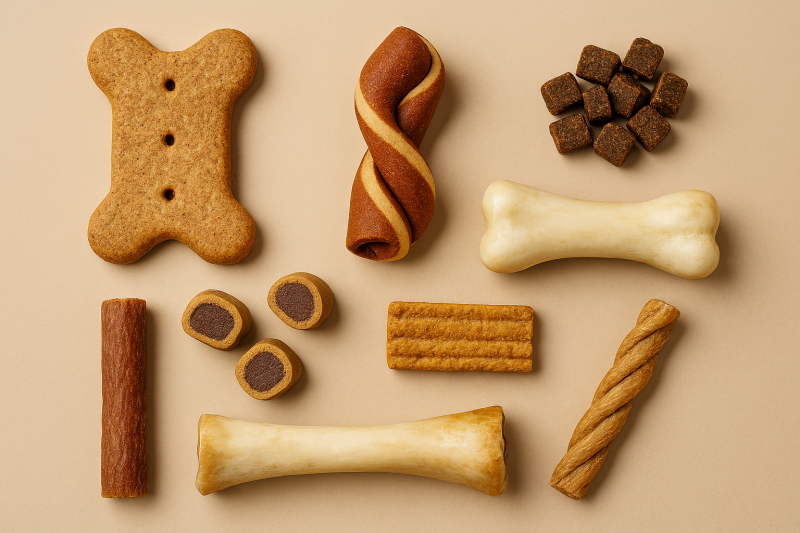
Walk into any pet store and you’ll see it — an entire wall of dog treats in every shape, size, and flavor imaginable. It’s exciting, but also overwhelming. With so many options, how do you know which treats are actually good for your dog?
Choosing the right treat isn’t just about flavor. It’s about health, safety, purpose, and your dog’s unique needs. Here’s a clear, friendly guide to help you make confident choices every time.
🍖 1. Start With the Ingredients
Veterinary experts consistently emphasize that ingredients are the most important factor when choosing treats.
Look for:
-
Real, recognizable foods (chicken, beef, sweet potato, pumpkin)
-
Short ingredient lists
-
Human‑quality or whole‑food ingredients
-
No artificial colors, preservatives, or fillers
Avoid:
-
Chemical preservatives
-
“Meat by‑products” or vague proteins
-
Excessive salt, sugar, or artificial smoke flavoring
If you can’t pronounce it — or wouldn’t eat it yourself — your dog probably shouldn’t either.
🐶 2. Consider Your Dog’s Size, Age & Chewing Style
Not all treats fit all dogs. According to pet‑nutrition guides, size and texture matter more than most people realize.
Puppies
-
Softer treats
-
Small pieces for training
-
Limited ingredients to avoid tummy upset
Adult Dogs
-
Chews or crunchy treats for dental benefits
-
High‑value treats for training or enrichment
Seniors
-
Softer textures
-
Lower‑calorie options
-
Joint‑support treats if recommended by a vet
🌾 3. Watch for Allergies or Sensitivities
Many dogs react to common proteins like chicken or beef. If your dog has itchy skin, ear infections, or digestive issues, consider:
-
Single‑protein treats
-
Limited‑ingredient treats
-
Novel proteins (duck, salmon, lamb)
A vet‑approved guide notes that identifying allergens early can prevent long‑term issues.
🎯 4. Match the Treat to the Purpose
Different treats serve different roles. Choosing the right type makes training easier and snacking healthier.
Training
-
Small, soft, low‑calorie
-
Easy to break apart
-
High‑value flavors (salmon, liver)
Daily Rewards
-
Crunchy biscuits
-
Chews that last longer
-
Moderate calories
Enrichment
-
Treats that fit puzzle toys
-
Freeze‑dried meats
-
Chewy sticks for mental stimulation
🦷 5. Consider Dental Health
Crunchy or textured treats can help reduce plaque buildup, though they shouldn’t replace brushing. Many pet‑care sources recommend choosing treats designed to support dental hygiene when appropriate.
⚖️ 6. Keep Calories in Check
Veterinary nutritionists recommend that treats make up no more than 10% of your dog’s daily calories. This helps prevent weight gain — one of the most common health issues in pets.
🛡️ 7. Safety First: Size, Hardness & Supervision
A treat should never be so hard that it risks breaking teeth. A good rule of thumb: if you can’t dent it with your fingernail, it’s too hard.
Always supervise your dog with:
-
Bones
-
Hard chews
-
Rawhide alternatives
-
Anything that can splinter or be swallowed whole
🌱 8. Choose Brands That Value Transparency
Look for companies that:
-
Clearly list ingredients
-
Explain sourcing
-
Use human‑quality or natural ingredients
-
Avoid chemicals and preservatives
-
Offer small‑batch or handcrafted products
This is exactly the philosophy behind your own Bone Appétit Feeder Company — natural treats, real ingredients, and products made with care.
🐾 Final Thoughts
Choosing the right treat doesn’t have to be complicated. Focus on real ingredients, your dog’s needs, and the purpose of the treat. When in doubt, simple and natural is always a safe bet.
If you want, I can also turn this into:
-
A shorter social‑media version
-
A product‑specific version for your 2026 treat lineup
-
A version that highlights your feeders, treat holders, and enrichment toys
Create Your Own Website With Webador